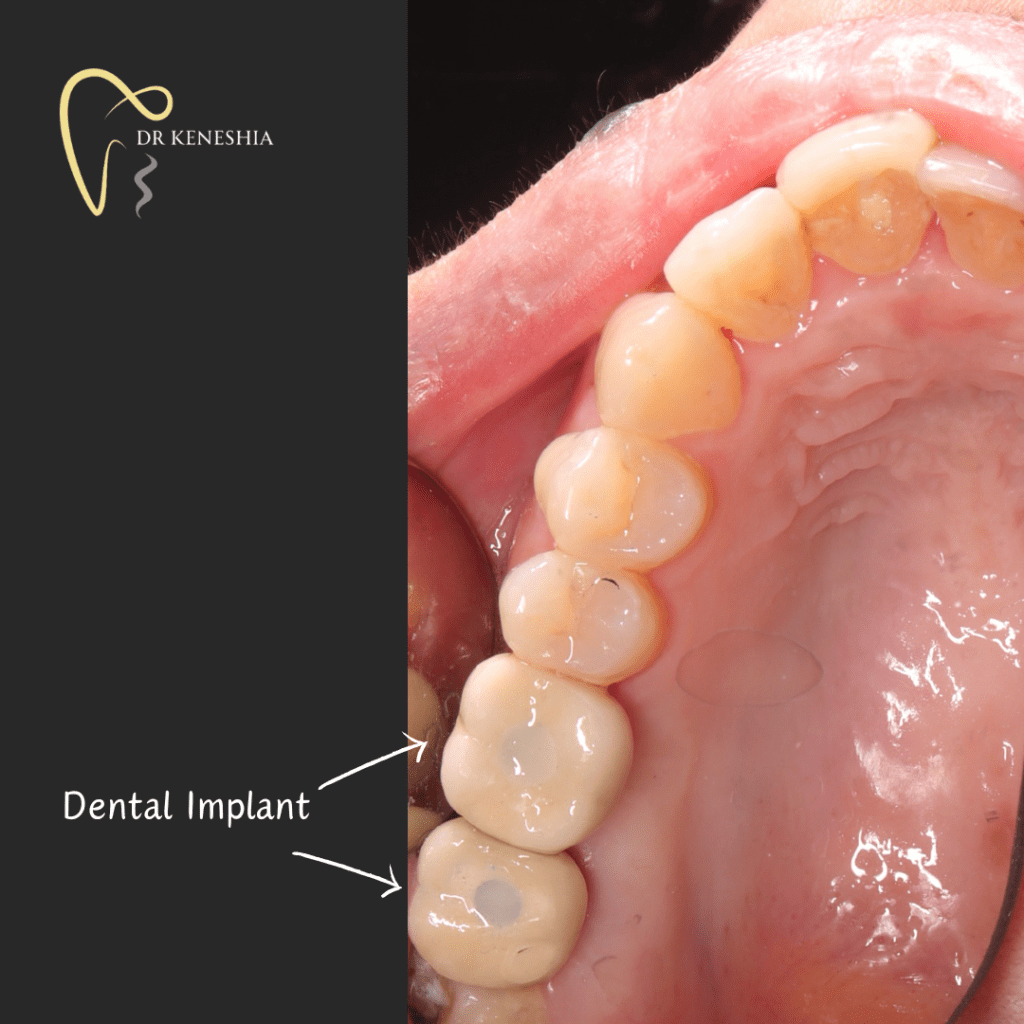
When deciding between dental implants and dental bridges, it’s important to consider several factors, as both options have distinct advantages and disadvantages depending on your dental needs and preferences.
Dental Implants:
Advantages:
- Long-Term Solution: Dental implants are a durable, long-lasting solution for replacing missing teeth. With proper care, they can last a lifetime.
- Natural Look and Feel: Implants are designed to look and feel like natural teeth. They are anchored into the jawbone, providing stability and preventing bone loss.
- Preservation of Adjacent Teeth: Implants do not require adjacent teeth to be modified or shaved down, unlike dental bridges. This helps preserve the health and integrity of neighboring teeth.
- Improved Oral Health: Implants stimulate the jawbone, which helps maintain bone density and prevents deterioration over time.
Disadvantages:
- Surgical Procedure: Implant placement involves surgery, which may require a longer recovery period compared to dental bridges.
- Cost: Dental implants tend to be more expensive than dental bridges, especially if additional procedures like bone grafting are needed.
- Time-Consuming: The entire process of getting implants can take several months, as it involves multiple stages including healing periods between procedures.
Dental Bridges:
Advantages:
- Non-Surgical Option: Unlike implants, bridges do not require surgery for placement. They are typically cemented onto existing teeth or implants.
- Quicker Procedure: Bridges can often be placed within a few visits to the dentist, making them a faster solution compared to implants.
- Cost-Effective: Generally, dental bridges are less expensive upfront compared to implants, although they may need to be replaced over time.
Disadvantages:
- Adjacent Tooth Modification: Dental bridges require the adjacent teeth to be shaved down and fitted with crowns to support the bridge. This process can weaken these teeth over time.
- Limited Lifespan: While durable, bridges typically last 5-15 years with proper care. They may need to be replaced eventually.
- Bone Health: Unlike implants, which stimulate the jawbone, bridges do not provide this benefit and may not prevent bone loss over time.
Choosing Between Implants and Bridges:
- Health of Adjacent Teeth: If adjacent teeth are healthy and strong, a bridge may be a suitable option. However, if they are weakened or compromised, implants may be preferred to avoid further damage.
- Long-Term Goals: Consider your long-term dental health goals. Implants are often recommended for their longevity and ability to preserve bone health, whereas bridges provide a quicker solution.
- Cost Considerations: While bridges may be initially less expensive, implants may offer greater value over the long term due to their durability and oral health benefits.
Ultimately, the choice between dental implants and bridges depends on your individual circumstances, including your oral health, budget, and preferences. Consulting with a qualified dentist or prosthodontist will help you make an informed decision based on your specific needs.
 DrKeneshia DMD
Leave a comment